
XIAMEN ACEY NEW ENERGY TECHNOLOGY CO., LTD.

التصنيفات
مدونة جديدة
كيفية تجميع حزمة بطارية أسطوانية: دليل العملية والمعدات
August 28 , 2026كيفية تجميع حزمة بطاريات أسطوانية: دليل العملية والمعدات
قد تختلف حزم البطاريات الأسطوانية المستخدمة في الأدوات الكهربائية والدراجات الكهربائية والطائرات بدون طيار ومحطات الطاقة المحمولة وأنظمة تخزين الطاقة اختلافًا كبيرًا في الجهد والسعة وبنية الحزمة، ولكن معظم خطوط الإنتاج تتبع تسلسل تجميع مماثل.
تشمل الخطوات الرئيسية تصنيف سعة الخلايا، وتطبيق ورق العزل، وفرز جهد الدائرة المفتوحة والمقاومة الداخلية، وترتيب الخلايا، وفحص القطبية، واللحام الموضعي، واختبار نظام إدارة البطارية.وتثبيت، اختبار العبوة النهائية، والتعبئة والتغليف، والترميز، واختبارات التقادم بالشحن والتفريغ.
يمكن تنظيم هذه العمليات على شكل محطات عمل غير متصلة بالإنترنت، أو خط إنتاج شبه آلي، أو خط إنتاج آلي بالكامل.
عملية تجميع حزمة البطارية الأسطوانية
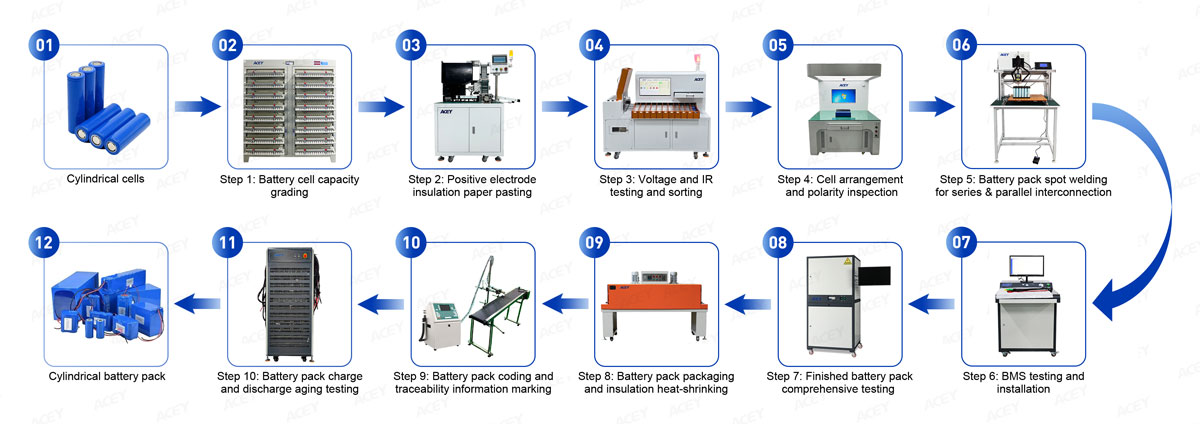
تصنيف سعة الخلايا ← لصق ورق العزل ← فرز جهد الدائرة المفتوحة وجهد التيار المتردد ← ترتيب الخلايا ← فحص القطبية ← اللحام النقطي ← اختبار وتركيب نظام إدارة البطارية ← اختبار حزمة البطارية ← التغليف والترميز ← تقادم الشحن/التفريغ
تركز الخطوات القليلة الأولى على اتساق الخلايا وترتيبها الصحيح. ويؤدي اللحام وتجميع نظام إدارة البطارية إلى إنشاء الاتصال الكهربائي للبطارية، بينما يتم استخدام اختبار البطارية النهائية واختبار التقادم للتحقق من البطارية المجمعة قبل الشحن.
المكونات الرئيسية لحزمة بطارية أسطوانية
تتكون حزمة البطارية الأسطوانية بشكل أساسي من:
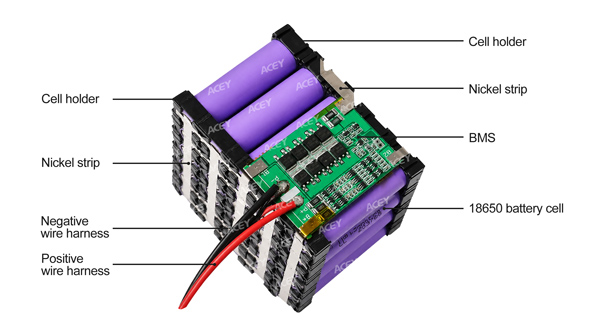
يحدد التوصيل التسلسلي جهد البطارية، بينما يزيد التوصيل المتوازي من السعة وقدرة التيار.
أحجام الخلايا الأسطوانية الشائعة واستخداماتها
تنسيقات الخلايا المدعومة
14500 · 18650 · 21700 · 26650 · 32650 · 32700 · 32140 · 33140
لا تستخدم جميع الآلات نفس الأدوات. قد يلزم تغيير المثبتات وحوامل الخلايا وآليات التغذية عند تغيير قطر الخلية أو ارتفاعها أو بنية التعبئة.
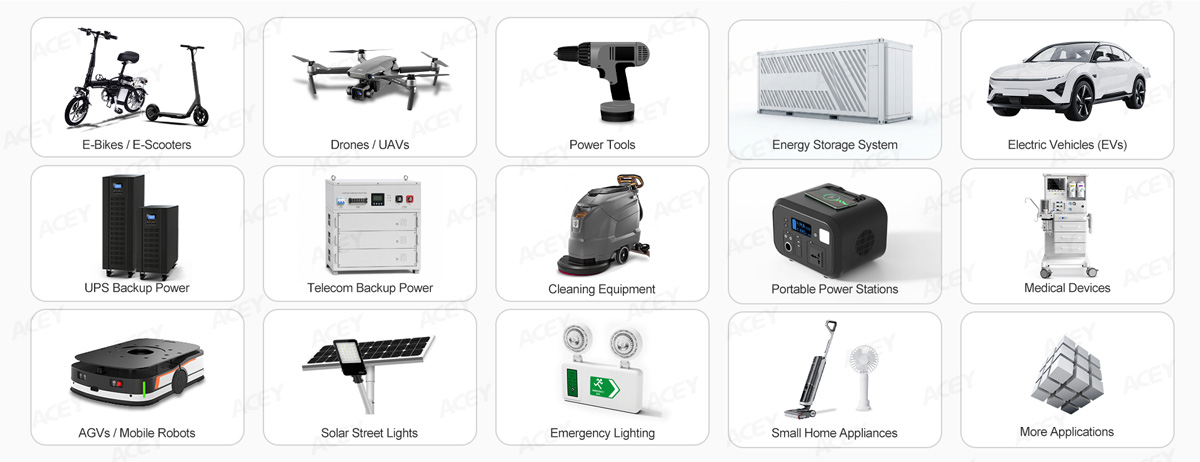
التطبيقات النموذجية
ما هي المعدات المستخدمة لتجميع حزمة بطارية أسطوانية؟
قد يشتمل نظام الإنتاج الكامل على المعدات التالية:
| عملية | غاية | معدات |
| تصنيف القدرة | قم بقياس وتجميع الخلايا حسب سعتها | آلة تصنيف خلايا البطارية |
| العزل | قم بتغطية الطرف الموجب بورق عازل | آلة لصق ورق العزل |
| فرز OCV و ACIR | قم بتصنيف الخلايا حسب الجهد والمقاومة | آلة فرز البطاريات |
| فحص القطبية | يفحص الأطراف الموجبة والسالبة للعبوة | جهاز اختبار قطبية CCD |
| التوصيل الكهربائي | قم بلحام شرائط التوصيل بالخلايا | ماكينة لحام البقع لحزمة البطاريات |
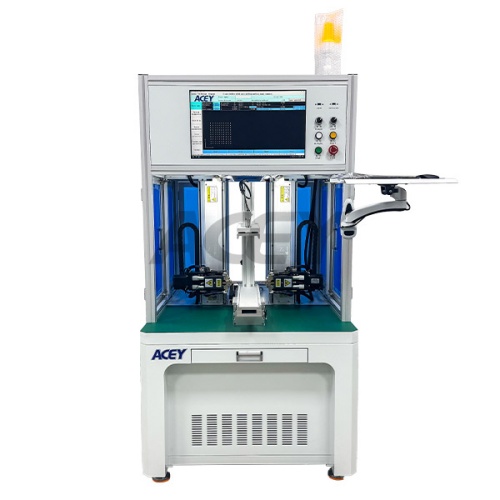
| التحقق من نظام إدارة المباني | اختبار وظائف لوحة الحماية | جهاز اختبار نظام إدارة المباني |
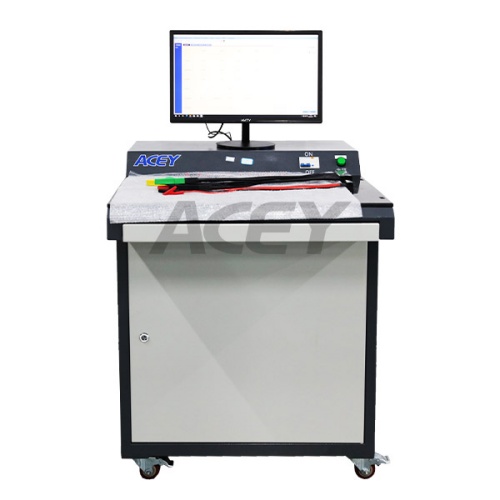
| تم الانتهاء من اختبار التعبئة والتغليف | تحقق من أداء العبوة المجمعة | جهاز اختبار شامل للبطاريات |
| التغليف | قم بتطبيق غشاء الانكماش الحراري | آلة الانكماش الحراري |
| تعريف | اطبع معلومات الدفعة والمنتج | آلة الترميز |
| شيخوخة | قم بتشغيل دورات الشحن والتفريغ | جهاز اختبار تقادم حزمة البطارية |
في إنتاج النماذج الأولية أو الكميات الصغيرة، يمكن أن تبقى العديد من العمليات يدوية. أما خطوط الإنتاج الضخمة فتؤتمت العمليات التي تؤثر بشكل كبير على الاتساق والإنتاجية، وخاصة الفرز، وفحص القطبية، واللحام، والاختبار.
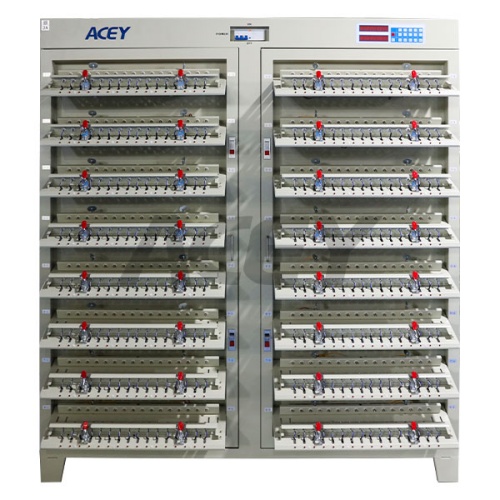
الخطوة 1 - تصنيف سعة الخلية
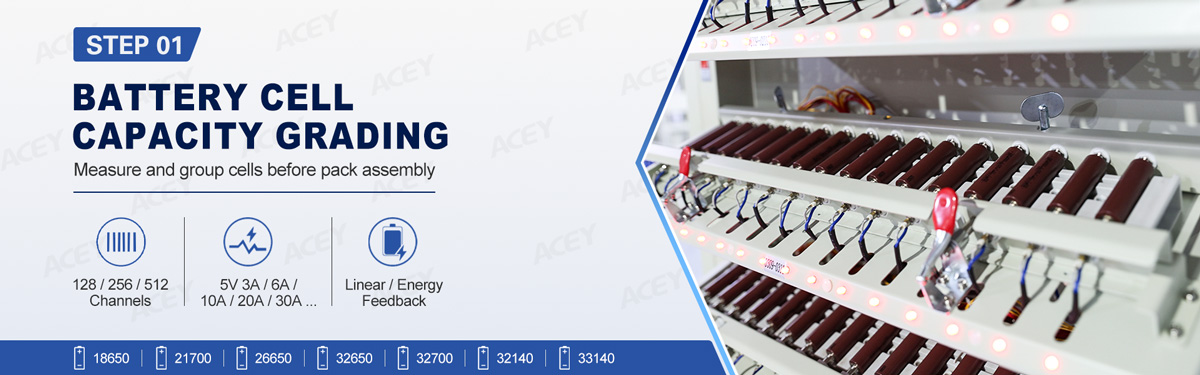
قبل التجميع، يتم شحن الخلايا وتفريغها لقياس السعة القابلة للاستخدام والأداء الأساسي.
الهدف هو منع تجميع الخلايا ذات السعات المختلفة بشكل كبير - نتيجةً لنفاد الشحنة أو فقدانها أثناء التخزين أو النقل لفترات طويلة - في نفس حزمة البطارية. فالخلايا الأضعف تحد من الأداء القابل للاستخدام لمجموعة البطاريات المتصلة على التوالي أو بالتوازي.
أ لالإيثيومأيون آلة فرز الخلايا يقوم بتشغيل دورات الشحن والتفريغ المبرمجة عبر قنوات متعددة ويسجل البيانات لكل خلية.
يمكن تهيئة أنظمة تصنيف ACEY للأشكال الأسطوانية الشائعة مثل:
18650 · 21700 · 26650 · 32650 · 32700 · 32140 · 33140
تشمل التكوينات المتاحة ما يلي:
بالنسبة لمعالجة الخلايا بكميات كبيرة، يسمح الفرز متعدد القنوات باختبار مئات الخلايا في نفس الوقت قبل دخولها مرحلة تجميع العبوة.
المعدات الموصى بها: آلة تصنيف خلايا البطاريات
الخطوة الثانية - وضع ورق العزل
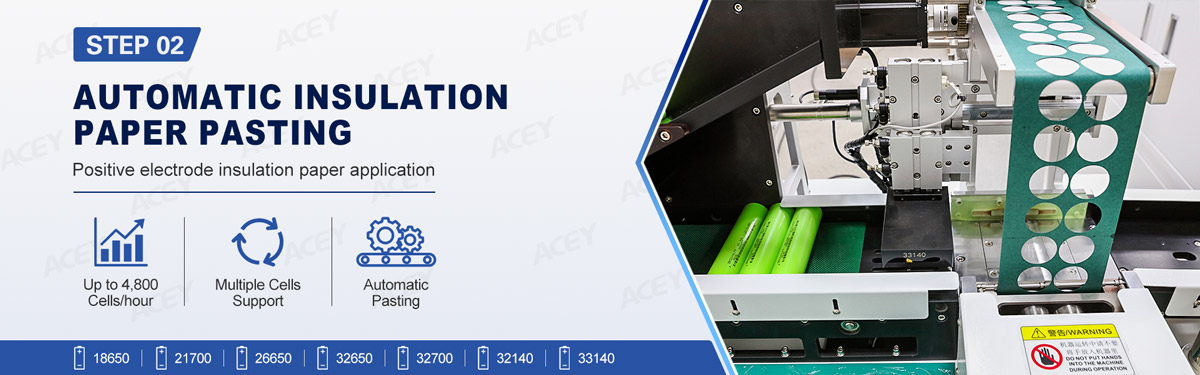
يتم وضع ورق العزل حول الطرف الموجب بعد تحديد درجة السعة.
يساعد هذا العزل الإضافي على فصل منطقة الطرف الموجب عن غلاف الخلية المعدني (الأنود) أثناء التجميع.
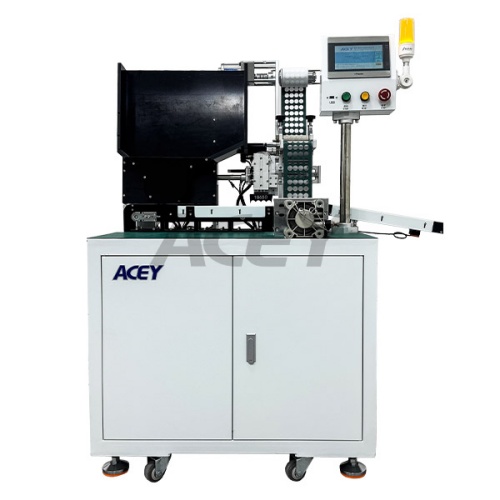
أنآلة لصق ورق العزل الأوتوماتيكيةتقوم آلات ACEY بقص الورق وتطبيقه بدقة متناهية. ويمكن تجهيزها بأدوات قابلة للتغيير لتناسب الخلايا الأسطوانية المختلفة.
يمكن أن تصل سرعة الإنتاج إلى 4800 خلية في الساعة، وذلك حسب تكوين الخلية والآلة.
تشمل التنسيقات الشائعة ما يلي:
18650 · 21700 · 26650 · 32650 · 32700
Larger cylindrical cells such as 32140 and 33140 require suitable tooling and machine configuration.
Recommended Equipment: Battery Insulation Paper Sticking Machine
Step 3 — OCV and Internal Resistance Sorting
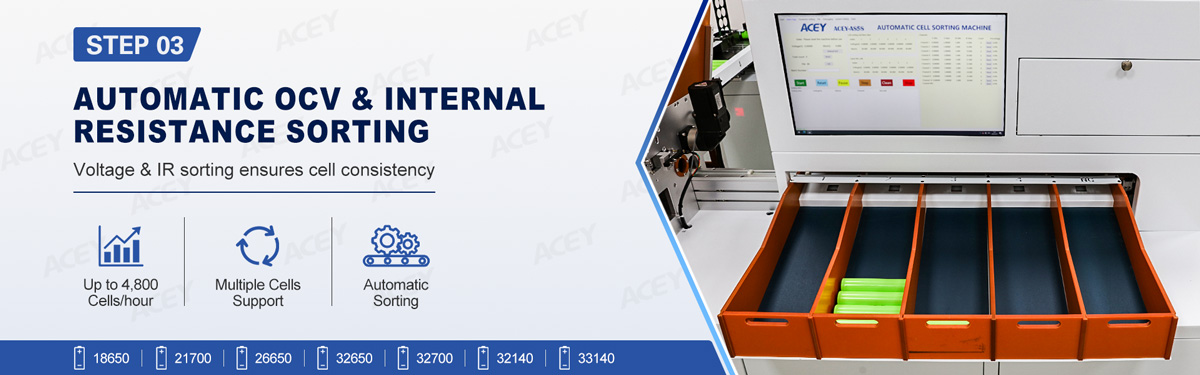
Capacity grading alone is not enough for final cell matching.
Before assembly, it is also necessary to measure theopen-circuit voltageandAC internal resistanceof the battery cells to ensure the consistency of the battery pack.
The measured values are compared with preset ranges, and the cells are automatically separated into different groups.
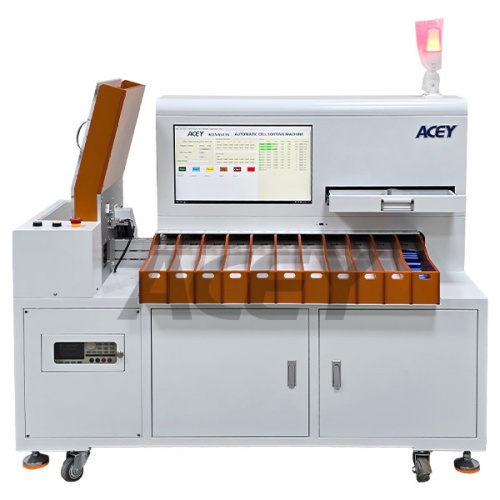
ACEY cylindrical battery sorting machines are available with standard 5-, 6-, 10-, or 11-channel configurations, with customized options also available. They can be integrated with branded testers such as the HIOKI BT3561 or other compatible instruments to measure open-circuit voltage (OCV) and AC internal resistance.
Barcode scanning can also be added when the production process requires cell-level traceability.
Cells with large differences in voltage or resistance may behave differently under charge and discharge. Sorting helps the manufacturer build packs from cells with closer electrical characteristics.
For production lines that combine insulation paper application and sorting, these processes can also be integrated to reduce repeated cell handling.
Recommended Equipment: Cylindrical Battery Sorting Machine
Step 4 — Cell Arrangement and Polarity Inspection
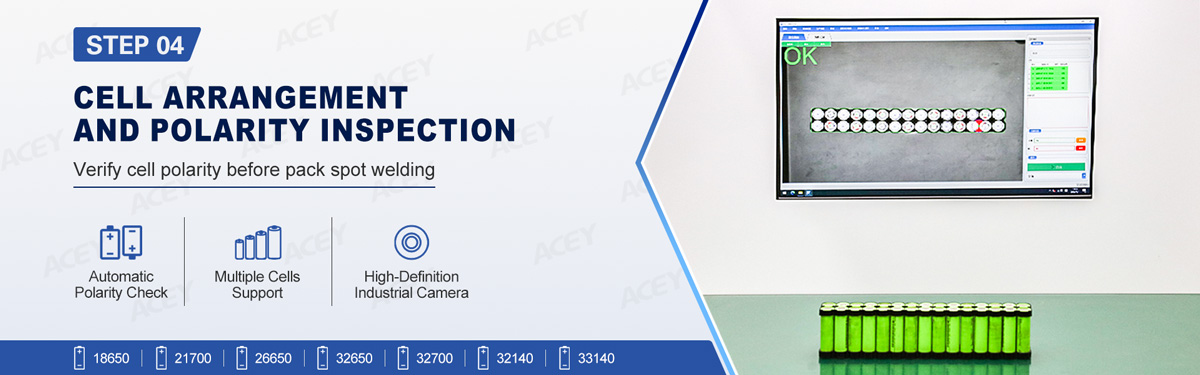
Sorted cells are placed into the required series-parallel arrangement using cell holders or dedicated fixtures.
Before welding, the positive and negative orientation of every cell should be checked.
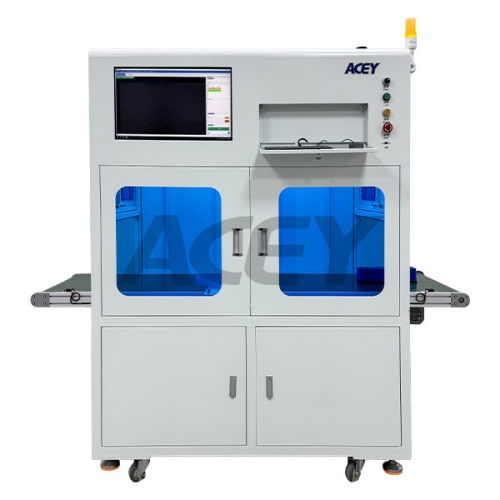
For small production runs, this may be done manually. On semi-automatic and automatic lines, a CCD polarity inspection system is more reliable because it checks the complete cell group against the preset pattern.
ACEY CCD inspection systems can be configured for cylindrical cells including:
18650 · 21700 · 26650 · 32650 · 32700 · 32140 · 33140
Any reversed or incorrectly positioned cell can be identified before the pack enters the welding station.
Recommended Equipment: CCD Tester
Step 5 — Battery Pack Spot Welding
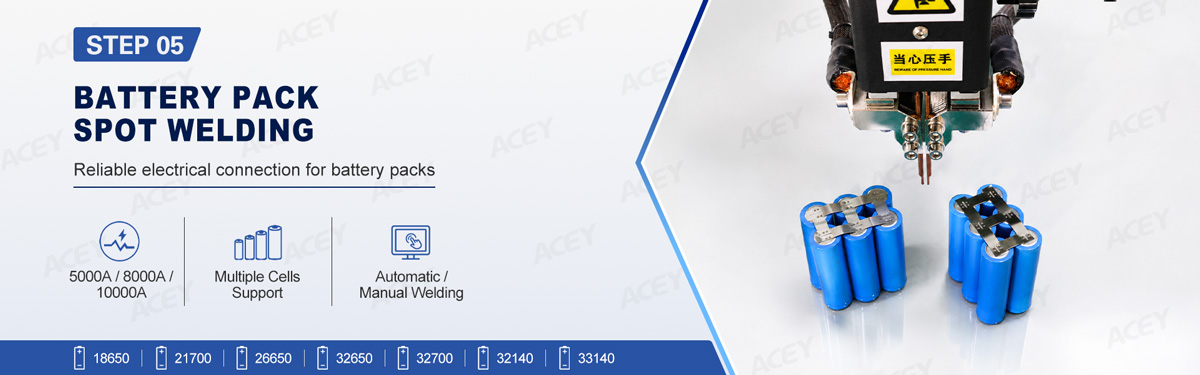
Spot welding is one of the most important operations in cylindrical battery pack assembly.
The cells are connected in series and parallel by welding nickel or nickel-plated connecting strips to the cell terminals.
The welding result is affected by more than welding current. The main process variables include:
ACEY provides 5000A, 8000A and 10000A DC inverter or transistor welding power supply configurations for cylindrical battery pack assembly.
Machine options include:
Automatic models can store welding programs for different battery pack designs and move between preset welding positions.
For production use, welding parameters should be validated with the actual cell and connecting strip. A parameter that works well on one battery pack should not automatically be copied to another design.
The inspection criteria may include weld appearance, connection strength and electrical resistance according to the manufacturer’s own process standard.
Recommended Equipment: Battery Pack Spot Welding Machine
Step 6 — BMS Testing and Installation
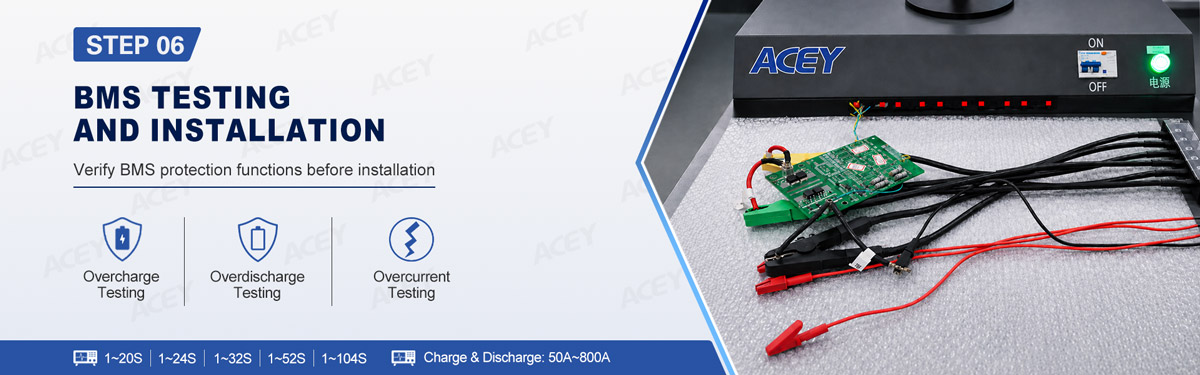
After the cell groups are electrically connected, the battery management system is installed according to the pack design.
Before installation or final integration, the BMS can be tested to verify its protection functions.
A BMS tester mainly check functions such as:
The required test range is determined by the BMS series count, voltage and current rating.
After BMS verification, assembly work includes:
This part of the process varies significantly from one battery pack to another. BMS specifications and electrical drawings are therefore important when configuring the assembly workstation or production line.
Recommended Equipment: BMS Tester
Step 7 — Finished Battery Pack Testing
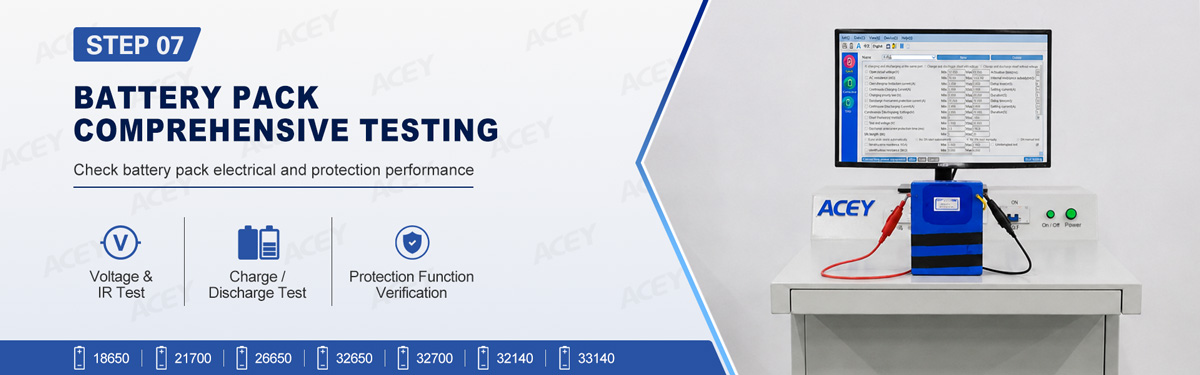
Once the BMS, wiring and electrical connections are complete, the battery pack is tested as a finished assembly.
This step checks components and connections introduced during battery pack assembly rather than the performance of an individual cell.
A battery comprehensive tester can be configured to test:
Upper and lower limits are set in the test program, allowing the equipment to identify qualified and unqualified packs.
Finished pack testing is particularly useful for detecting problems related to:
ACEY provides different voltage and current configurations for small and larger battery packs.
Recommended Equipment: Battery Comprehensive Tester
Step 8 — Battery Pack Packaging
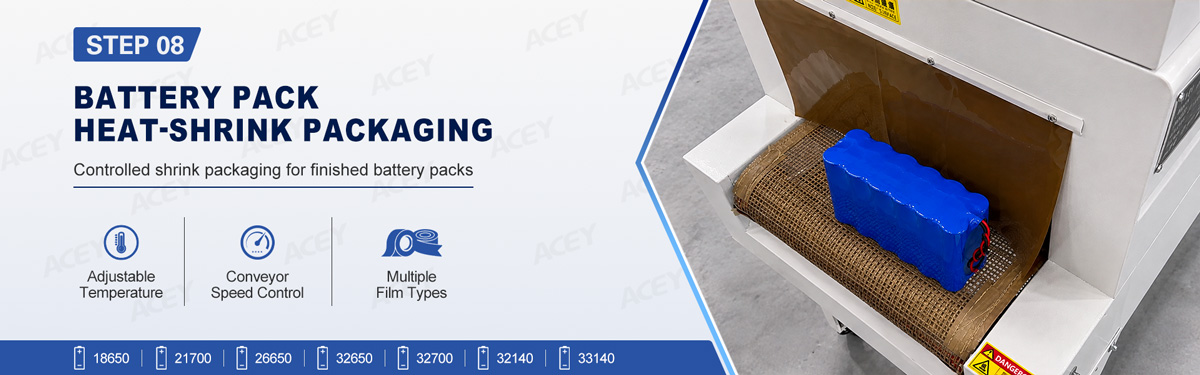
After electrical testing, the pack is prepared for final packaging.
The packaging method may include:
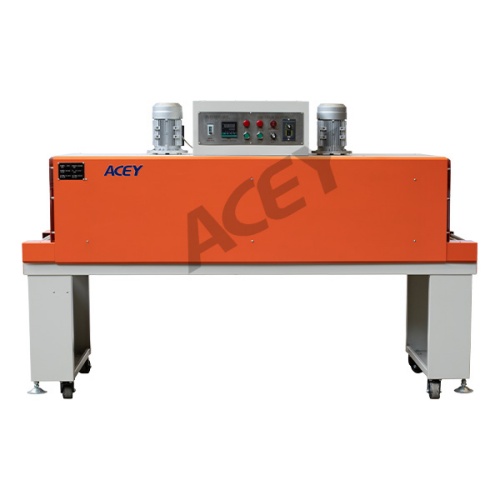
For heat-shrink packaging, the pack passes through a temperature-controlled shrink tunnel.
ACEY heat shrink machines are available with adjustable conveyor speed and temperature settings for different pack sizes and film materials.
Recommended Equipment: Automatic Heat Shrink Wrap Machine
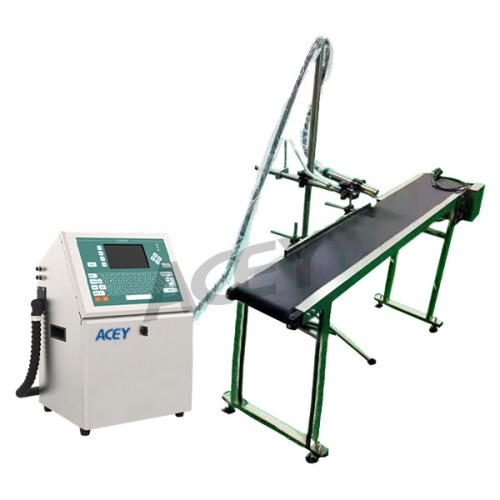
Step 9 — Coding and Traceability
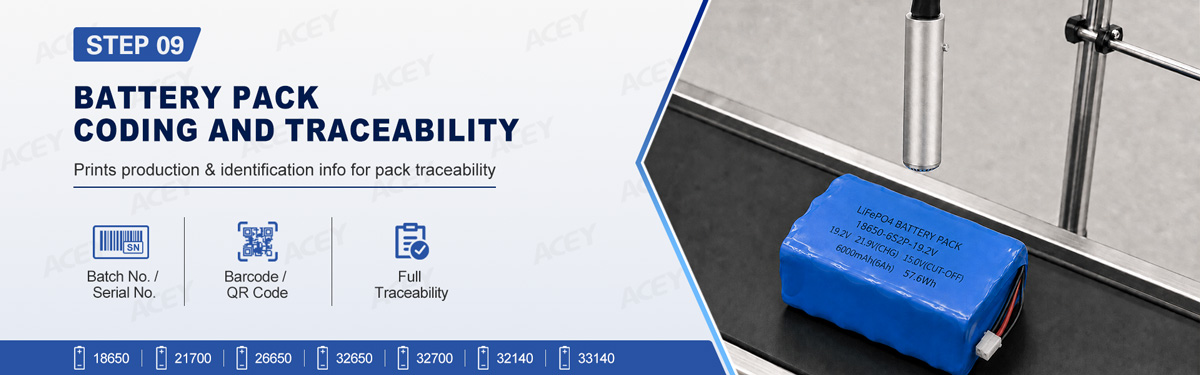
Pack identification is added before shipment or aging.
Printed information includes:
A handheld printer may be enough for small-batch production, while conveyor-based or continuous inkjet printers are more suitable for production lines.
If traceability is required, the printed code can be linked with earlier cell or pack test records.
Recommended Equipment: Battery Pack Coding Machine
Step 10 — Charge/Discharge Aging
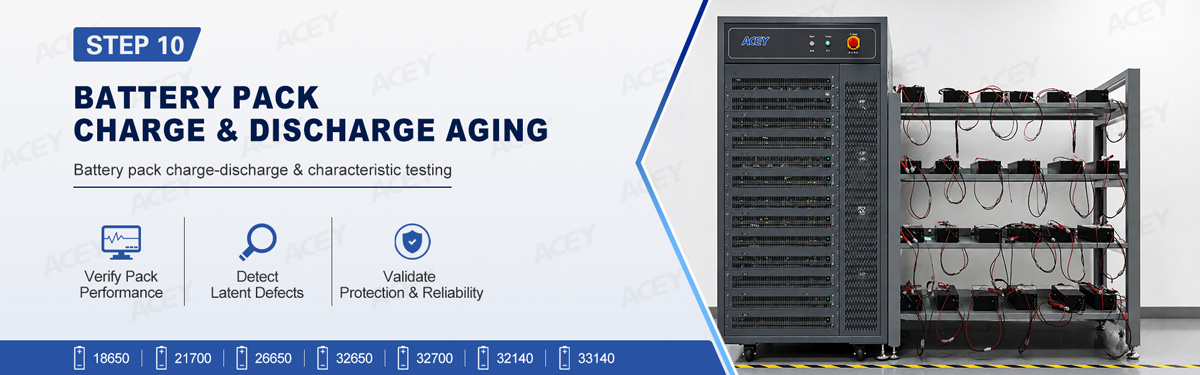
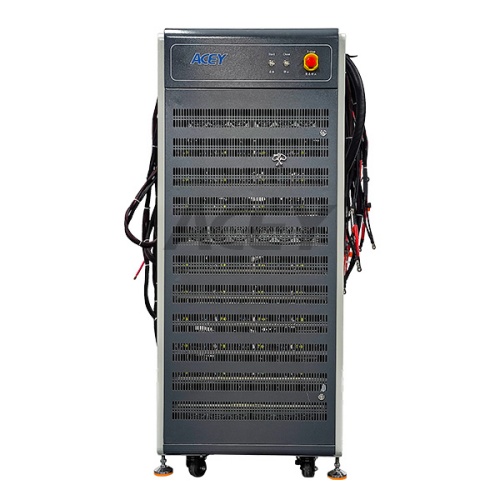
Aging is one of the final electrical verification steps.
The battery pack is charged and discharged according to a programmed test sequence. The system can record:
ACEY battery pack charge-discharge and aging systems cover a wide range of battery pack applications.
Available configurations include:
The selected tester must cover the pack’s maximum voltage and required charge/discharge current. Channel quantity is usually selected according to the planned production output and aging time.
For higher-power applications, energy-feedback systems can return part of the discharge energy to the electrical network instead of dissipating it only as heat.
Recommended Equipment: Battery Pack Aging Machine
Semi-Automatic or Fully Automatic?
The higher automation option is not always the better choice.
A semi-automatic production setup is more flexible when the manufacturer produces several battery pack models or changes fixtures frequently.
| Factor | Semi-Automatic Line | Fully Automatic Line |
| Production Volume | Small to medium | Medium to high |
| Investment | Lower | Higher |
| Changeover | More flexible | More dependent on tooling and line design |
| Labor | More manual operations | Lower labor requirement |
| Integration | Standalone or partially connected equipment | Integrated material flow |
| Traceability | Added where required | Easier to integrate across multiple processes |
Many cylindrical battery pack lines use a combination of both.
For example, cell sorting, CCD polarity inspection and automatic spot welding can be automated, while BMS installation, wiring or enclosure assembly remains manual.
This approach often gives better flexibility than trying to automate every process from the beginning.
How to Configure Cylindrical Battery Pack Assembly Equipment
The equipment should be selected from the actual battery pack design rather than only from the cell model.
Two 21700 battery packs may require completely different fixtures, welding machines and test systems if their series-parallel configuration, current requirement and mechanical structure are different.
Before equipment selection, it is useful to confirm the following information.
Cell Information
Battery Pack Design
Welding Information
BMS Information
Production Requirement
Testing Requirement
These details make it much easier to match each machine to the actual process and avoid buying equipment with either insufficient capacity or unnecessary specifications.
ACEY Cylindrical Battery Pack Assembly Solutions
ACEY supplies individual machines, semi-automatic production equipment and fully automatic assembly solutions for cylindrical lithium battery packs.
Equipment can be configured for cells including:
18650 · 21700 · 26650 · 32650 · 32700 · 32140 · 33140
Available processes cover:
For production-line projects, the configuration is developed around the customer’s battery pack, required output and test process rather than from a fixed machine list.
Planning a Cylindrical Battery Pack Project?
Please provide:
This information allows us to recommend the required machines, tooling, welding configuration and test system for the actual pack.
Discuss Your Battery Pack Assembly Project →
Frequently Asked Questions
*What machines are needed to make a cylindrical battery pack?
A typical production setup may include a cell grading machine, insulation paper sticking machine, OCV/IR sorter, CCD polarity tester, spot welder, BMS tester, battery comprehensive tester, packaging machine, coding machine and battery pack aging tester.
Small-batch production does not necessarily require all processes to be automated.
*What cylindrical cells can be used?
Common formats include 18650, 21700, 26650, 32650, 32700, 32140 and 33140.
Whether one machine can handle several cell sizes depends on its mechanical range and tooling. Fixtures, feeders and holders may need to be changed when switching cell formats.
What is the difference between capacity grading and OCV/IR sorting?
Capacity grading measures cell capacity through charge-discharge testing.
OCV/IR sorting measures open-circuit voltage and internal resistance and groups the cells according to preset ranges.
They are different steps and are often used together before battery pack assembly.
Why check cell polarity before welding?
A reversed cell can create the wrong series-parallel connection once the nickel strip is welded.
CCD inspection checks the complete cell arrangement before welding and identifies cells placed in the wrong direction.
What type of spot welder is used for cylindrical battery packs?
Resistance spot welding is commonly used for nickel and nickel-plated connecting strips.
ACEY provides 5000A, 8000A and 10000A welding power supply, including gantry, single-side automatic and double-side automatic configurations.
ينبغي اختيار الماكينة ومعايير اللحام وفقًا لطرف الخلية ومادة الشريط وسمك الشريط ونمط اللحام.
ما الفرق بين العجينهل تتضمن حزمة y اختبارات شاملة واختبارات للتقادم؟
هل يمكن لخط إنتاج واحد أن يصنع حزم بطاريات مختلفة؟
نعم، ولكن ليس بدون تغيير.
إذا تغير قطر الخلية أو أبعاد العبوة أو نمط اللحام، فيجب أيضًا تغيير الحامل أو التركيب أو المغذي أو برنامج اللحام.
توفر خطوط الإنتاج شبه الآلية مرونة أكبر للعملاء الذين ينتجون عدة نماذج من حزم البطاريات.
ما المعلومات التي تحتاجها شركة ACEY قبل التوصية بخط إنتاج؟
أهم المعلومات هي:
بفضل هذه التفاصيل، يمكن اختيار المعدات والأدوات بناءً على حزمة البطارية الفعلية بدلاً من استخدام تكوين خط إنتاج عام.
703, 7F, Zhonghengji Building, No.223, Qishan North Road, Huli District, Xiamen, Fujian, China
البريد الإلكتروني : allen@xmacey.com
هاتف : +8618950009155
Whatsapp : +8618950009155